Hanoi, October 14, 2026 – Deputy Governor Nguyen Ngoc Canh of the State Bank of Vietnam (SBV) attended and delivered remarks at a seminar entitled “Credit Policies and Carbon Market: Unlocking Green Capital Flows,” organized by Finance-Investment Newspaper.
The seminar focused on the links between credit policies, the carbon market, and capital markets, while exploring solutions to mobilize financial resources for the green transition.
In his remarks, Deputy Governor Nguyen Ngoc Canh noted that, following Vietnam’s commitments at the 26th United Nations Climate Change Conference (COP26) to achieve net-zero emissions by 2050, the Party, the State, and the Government had introduced important policies and guidelines to promote green growth, the energy transition, and low-carbon economic development. This transition requires substantial resources for technological innovation, changes in production methods, more efficient energy use, and greenhouse gas emissions reduction.
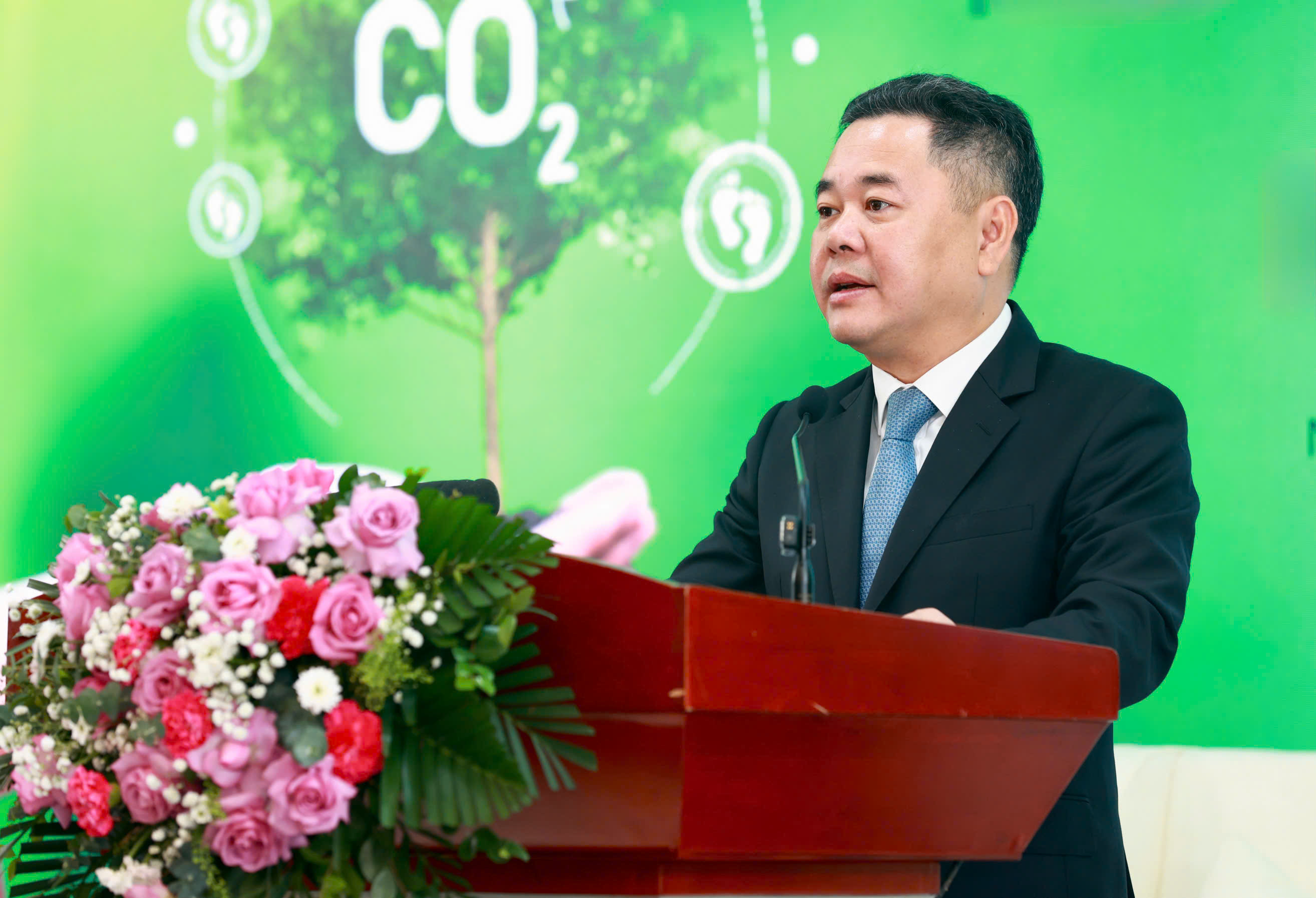
Deputy Governor Nguyen Ngoc Canh delivers remarks at the seminar
Against this backdrop, alongside resources from the state budget and capital and money markets, the Deputy Governor emphasized the need to develop additional market-based mechanisms to mobilize financial resources and create economic incentives for businesses to proactively reduce emissions, including through the carbon market.
By establishing emissions allowances, measuring emissions reductions, and determining trading prices for allowances and carbon credits, the carbon market provides a mechanism for translating emissions reduction outcomes into economic value. This, in turn, creates additional incentives for businesses to invest in the green transition and generate resources to support their efforts.
Analyzing the relationship between green credit and the carbon market, Deputy Governor Nguyen Ngoc Canh noted that green credit provides financing for investment and technological innovation, supporting the development of green industries and sectors and thereby contributing to emissions reductions.
Conversely, an effectively functioning carbon market can help businesses translate emissions reduction outcomes into economic value, generate additional resources for production and business activities, and improve the quality of bank credit. It can also enable businesses to purchase carbon credits to meet stringent requirements applicable to traded goods in international markets.

Overview of the seminar
Regarding implementation results, green credit activities have expanded since 2017, both in terms of lending volume and the number of participating credit institutions. As of the end of June 2026, outstanding green credit exceeded VND 856 trillion, up 9.87% from the end of 2025, with average annual growth of more than 20% during the 2017–2025 period.
Green credit was concentrated primarily in agriculture, forestry, fisheries, and biodiversity conservation, which accounted for more than 31% of the total, and green energy, which accounted for nearly 28%. Meanwhile, outstanding loans subject to environmental and social risk assessments exceeded VND 6.2 quadrillion, accounting for more than 31.33% of total outstanding loans across the economy.
These results demonstrate the banking sector’s continued efforts and commitment to supporting businesses and the broader economy in the green transition.
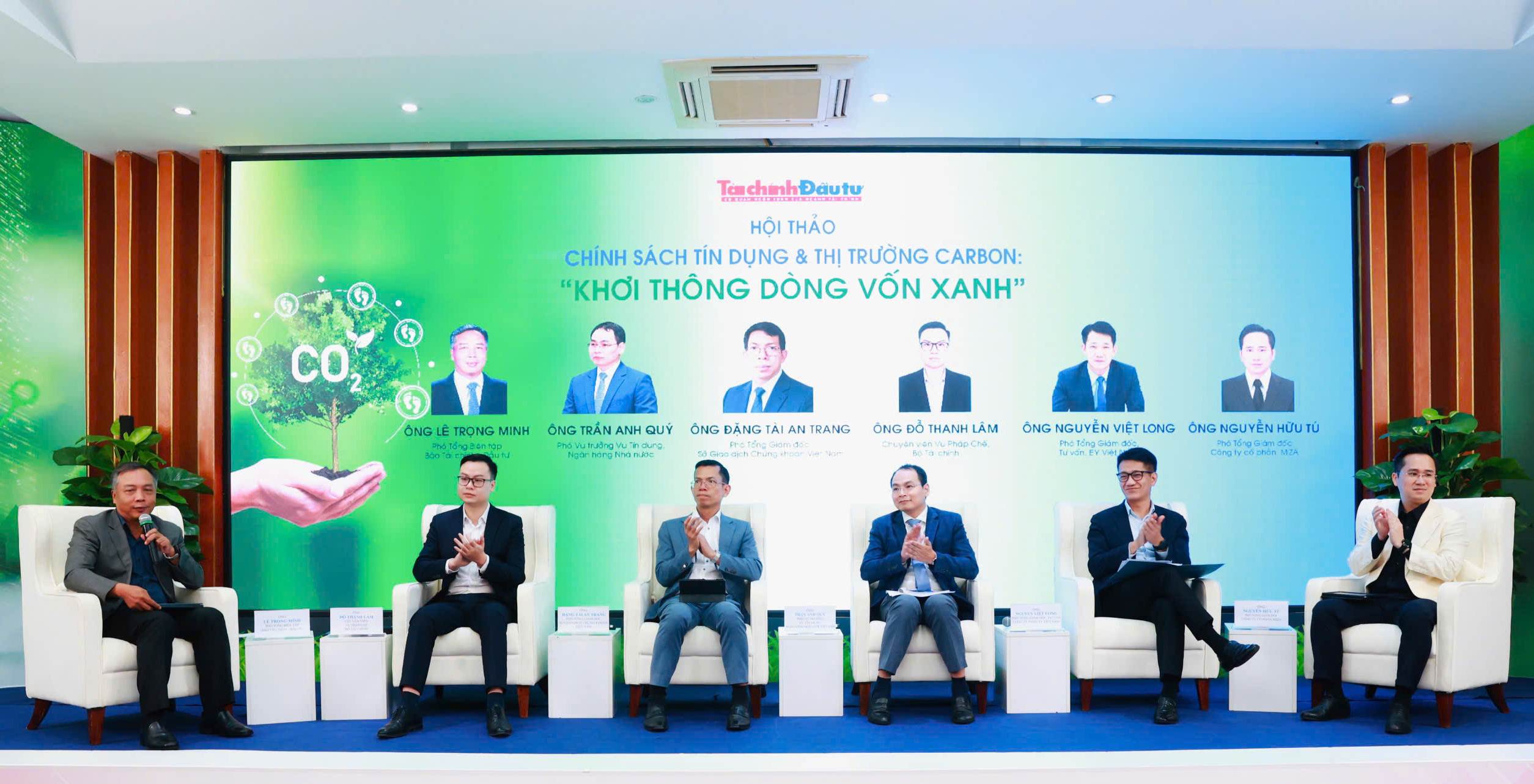
Participants engage in a discussion session at the seminar
At the seminar, participants discussed solutions to expand green capital flows, improve businesses’ access to finance, develop the carbon market, and strengthen the integration of the economic value of emissions reductions into financial decision-making.