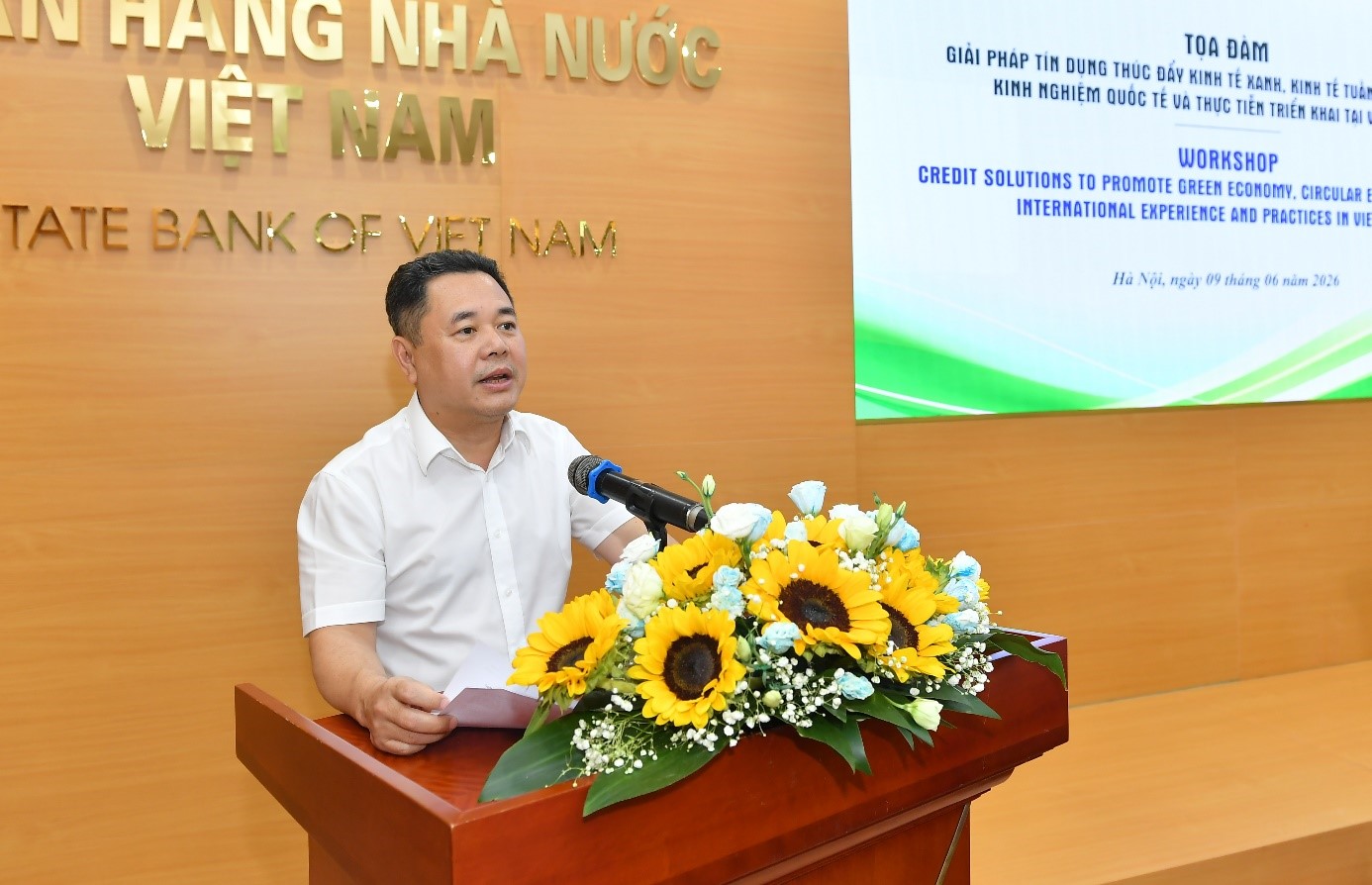
On June 9, 2026, in Hanoi, the State Bank of Vietnam (SBV), in coordination with the German Agency for International Cooperation (GIZ) and the Ministry of Agriculture and Environment (MAE), organized a workshop entitled “Credit Solutions to Promote Green Economy, Circular Economy, and ESG: International Experience and Practices in Vietnam.”
The workshop was co-chaired by Mr. Nguyen Ngoc Canh, Deputy Governor of the SBV; Ms. Michaela Baur, Country Director of GIZ in Vietnam; and Mr. Le Cong Thanh, Deputy Minister from the MAE. The event aimed to enhance dialogue, facilitate the sharing of international experience, and contribute to improving the legal framework for promoting credit flows and investment in sustainable economic models. These efforts are expected to strengthen the competitiveness of the economy and support Vietnam in achieving its goals of net zero emissions by 2050 and becoming a high-income country by 2045.
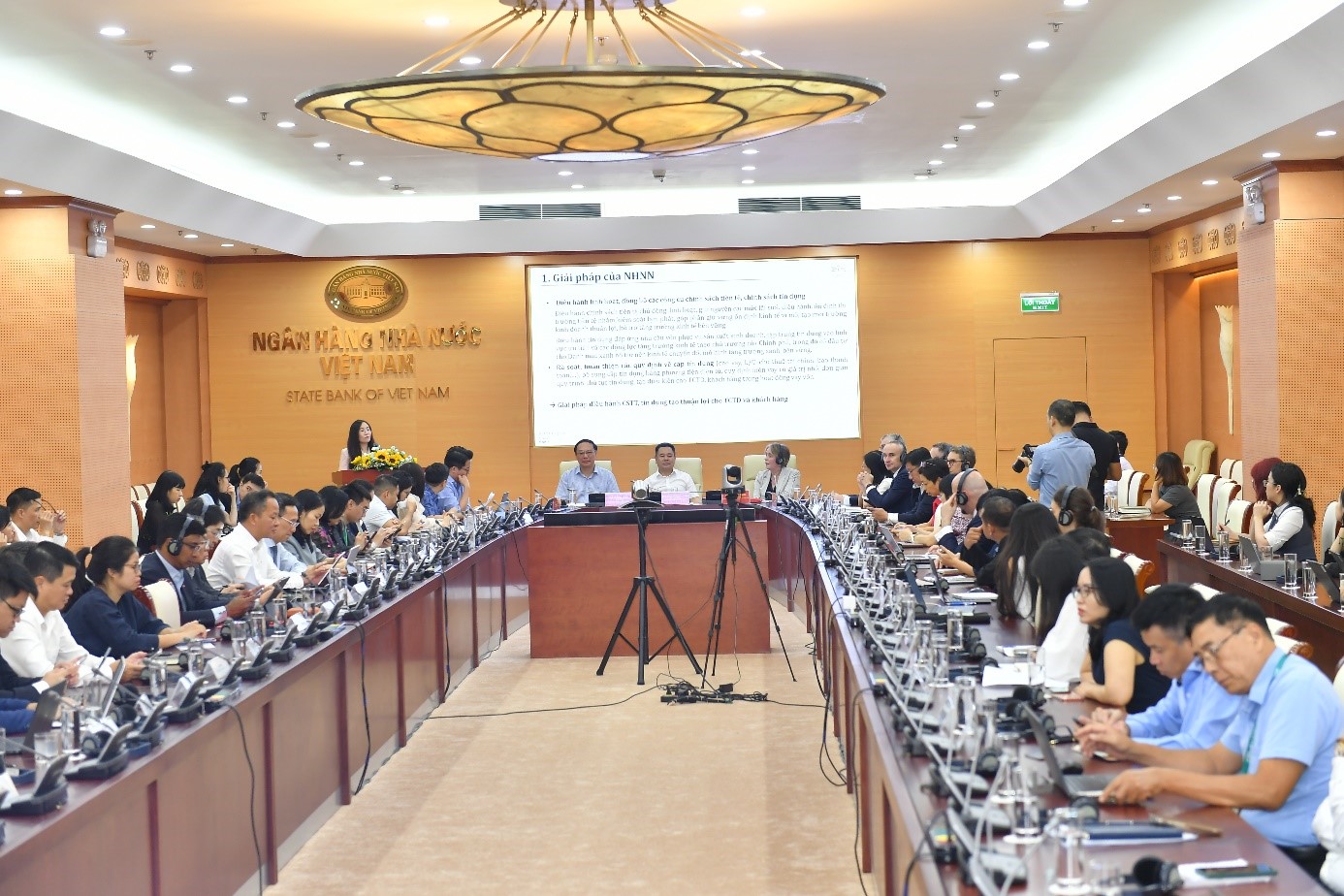
Overview of the workshop
In his opening remarks, Deputy Governor Nguyen Ngoc Canh emphasized that green growth, the circular economy, and environmental, social and governance (ESG) practices are no longer optional but have become urgent necessities in the face of increasingly evident challenges posed by climate change, environmental degradation, and resource depletion. He stressed that promoting economic growth while protecting the environment and using resources efficiently is essential for Vietnam to achieve sustainable, inclusive, and prosperous development.
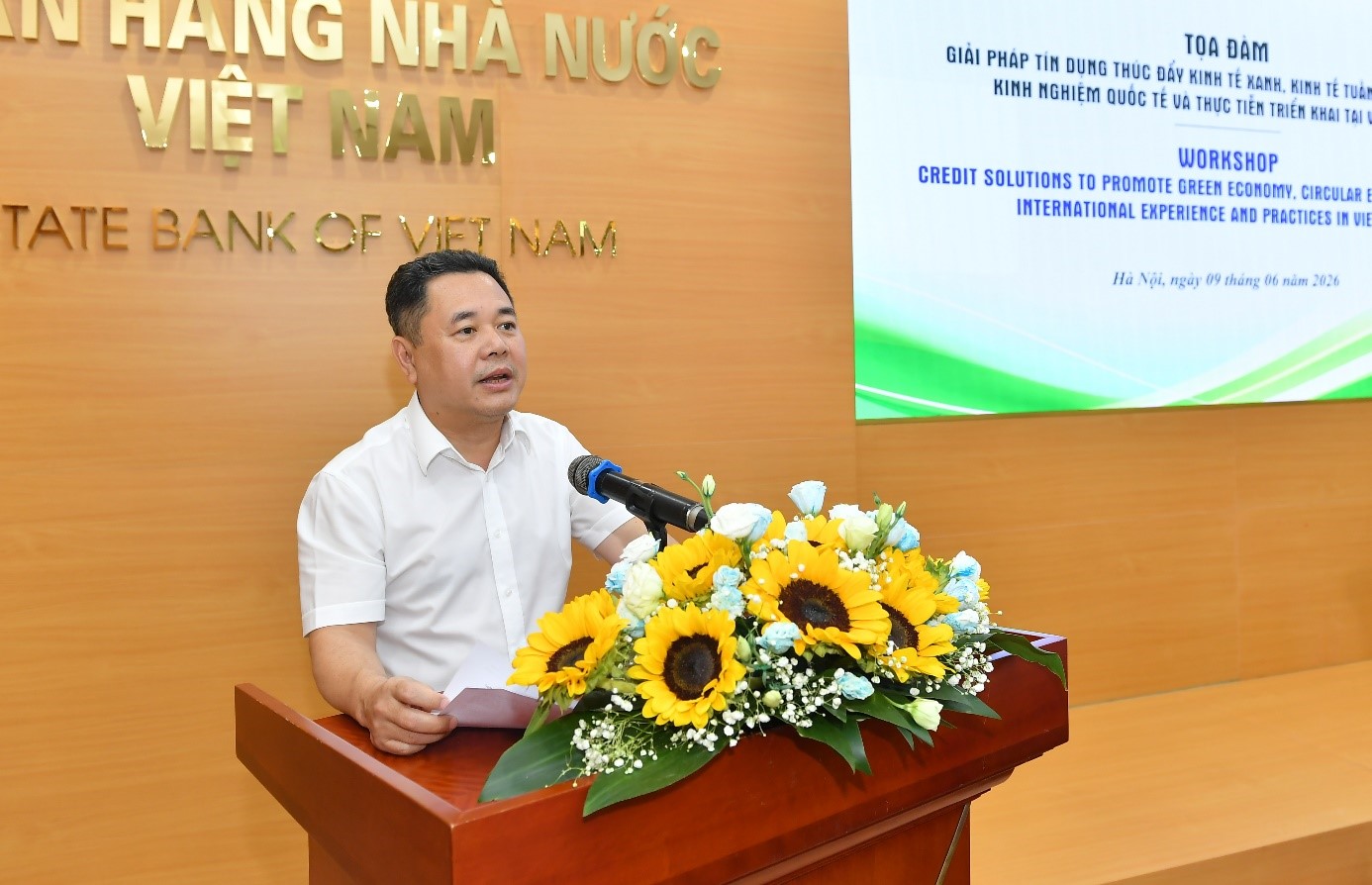
Deputy Governor Nguyen Ngoc Canh delivers his opening remarks at the workshop
The Deputy Governor noted that, in recent years, the banking sector has proactively implemented comprehensive solutions to promote green growth and sustainable development. The SBV has issued guidance on green credit activities and introduced various preferential credit programs and policies to encourage organic agriculture and agricultural production based on circular economy model.
In particular, the SBV is currently submitting to the Government a draft Decree on a 2% interest rate support scheme funded by the state budget for private-sector enterprises, business households, and individual business operators borrowing from banks to implement green and circular economy projects and apply ESG standards.
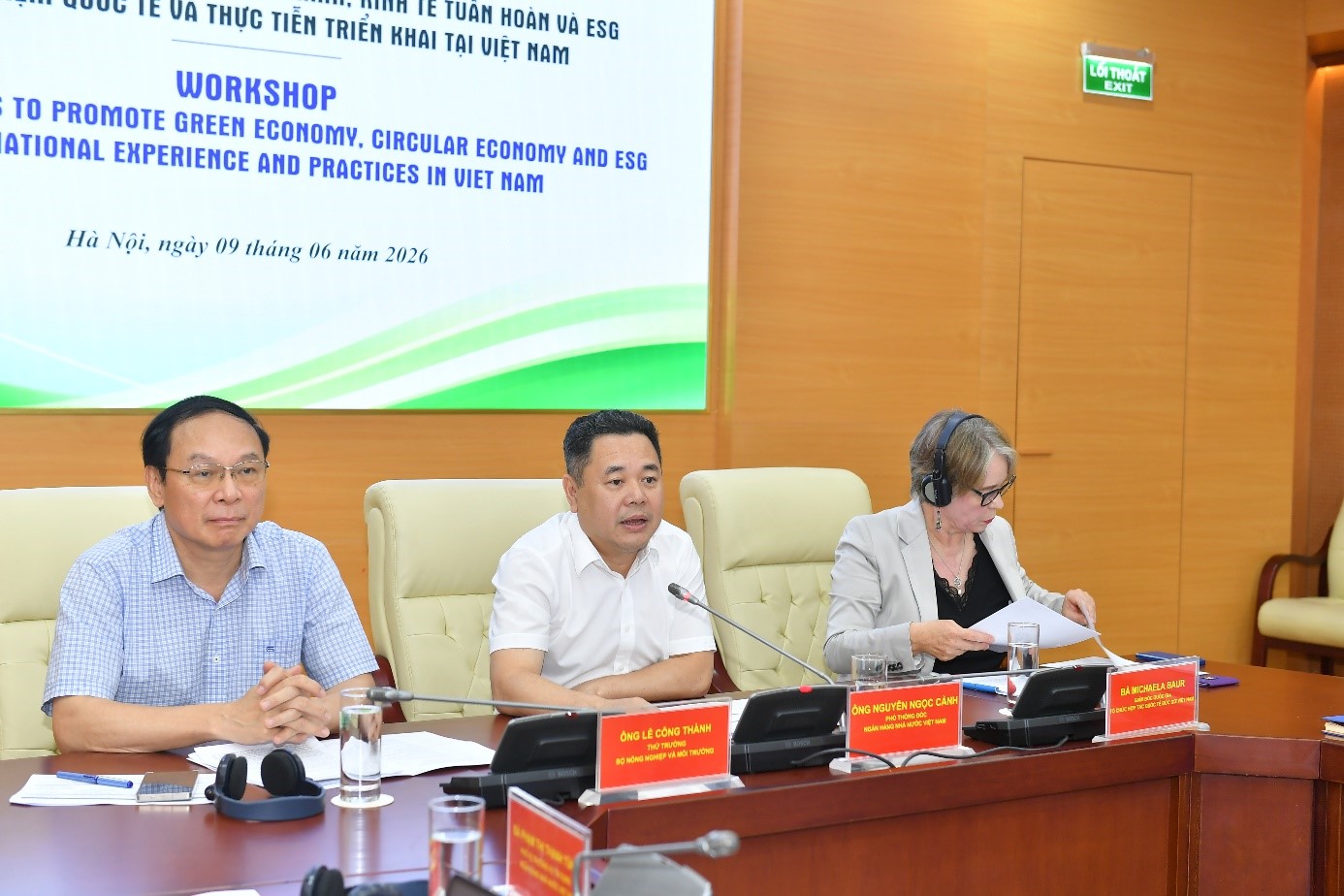
Deputy Governor Nguyen Ngoc Canh, GIZ Vietnam Country Director Michaela Baur, and Deputy Minister Le Cong Thanh co-chair the workshop
Regarding the implementation of green finance initiatives by credit institutions, the Deputy Governor stated that banks are increasingly prioritizing capital allocation to green sectors and circular economy models while integrating ESG factors into their development strategies.
To date, 82 credit institutions have reported outstanding green credit balances, reaching VND 828 trillion, with an average annual growth rate of over 20% during the 2017-2025 period. Outstanding loans assessed for environmental and social risks have exceeded VND 5.1 quadrillion, nearly 25 times than at the end of 2017, accounting for 27.7% of total outstanding credit in the economy.
At the workshop, participants focused their discussions on several key topics, including: (i) the implementation results of the banking sector’s credit solutions to promote the green economy, circular economy, and ESG practices; (ii) guidance on identifying green and circular projects, and applying environmental, social, and governance standards; (iii) international experiences in financing circular economy projects, implementing ESG frameworks, and recommendations for Vietnam
Speaking at the workshop, Ms. Michaela Baur, Country Director of GIZ Vietnam, stated that green finance cooperation between Germany and Vietnam is not merely a development partnership but also a strategic, two-way investment in green growth and competitiveness. She reaffirmed GIZ's commitment to continuing its support for Vietnam, the SBV, and the financial sector in building a greener, more competitive, more inclusive, and more prosperous economy.
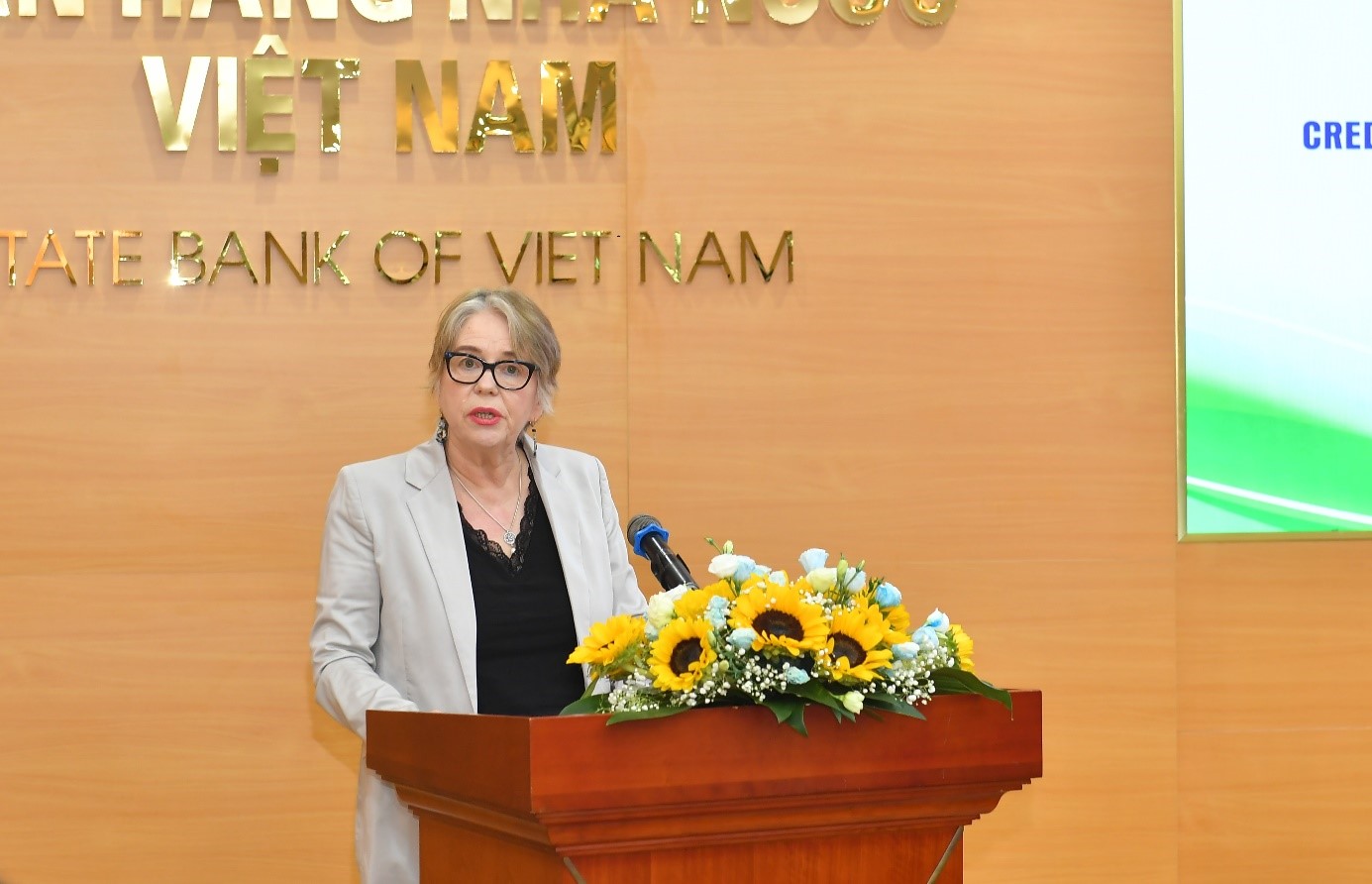
Ms. Michaela Baur, Country Director of GIZ Vietnam speaks at the workshop
Representatives of the Ministry of Agriculture and Environment also shared information and guidance on identifying green and circular projects and applying environmental and social standards. International experts from DZ Bank and KfW presented international experiences regarding ESG frameworks, ESG implementation in banking operations, and financing mechanisms for circular economy projects.
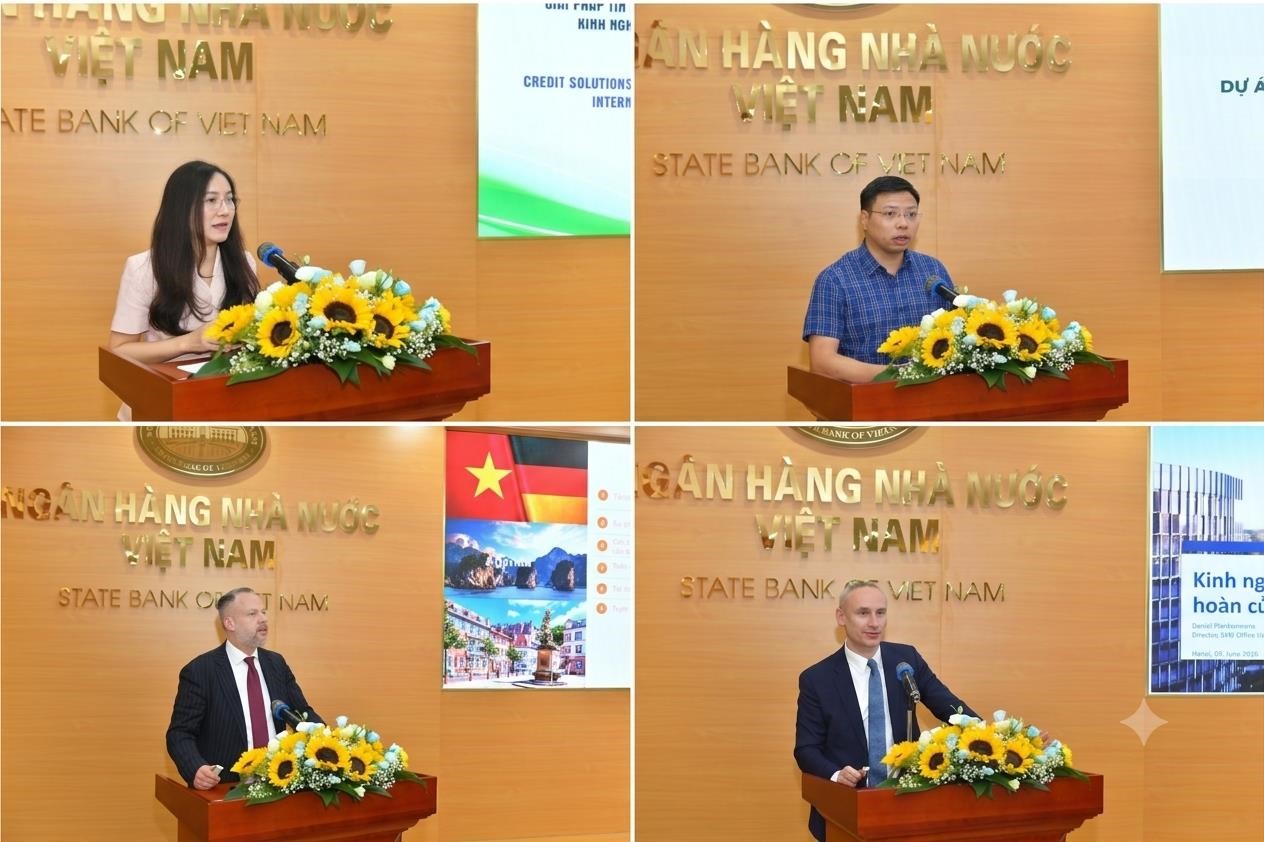
Participants share insights at the workshop
Going forward, the SBV will continue implementing policies and measures to promote green credit and support the development of the green economy, circular economy, and ESG practices. The banking sector will continue accompanying individuals and businesses in their green transition efforts, effectively implementing the Banking Sector’s Action Plan for the National Green Growth Strategy, channeling credit flows into green production, clean technologies, renewable energy, and circular economy initiatives, while fostering innovation, accelerating digital transformation, and strengthening environmental and social risk management capacity.
HY