
On April 14, 2026, in Hanoi, speaking at a press conference on the outcomes of the monetary policy management and the banking operations in the first quarter of 2026, Deputy Governor Pham Thanh Ha of the State Bank of Vietnam (SBV) stated that, amid numerous challenges in the global economy, the SBV has conducted monetary policy in a proactive and flexible manner, in close coordination with fiscal policy and other macroeconomic policies to ensure effective inflation control, maintain macroeconomic stability, and support economic growth.
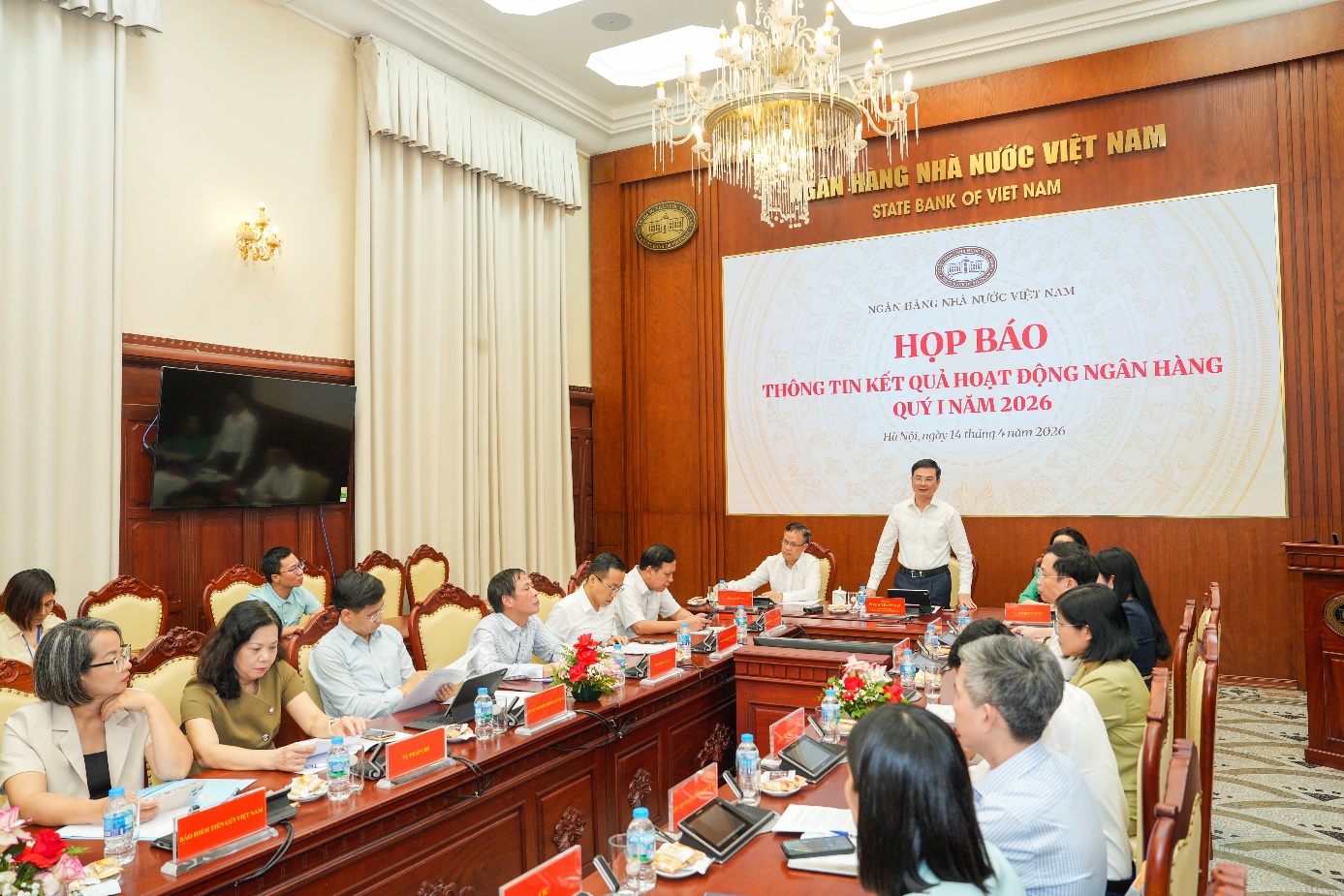
Deputy Governor Pham Thanh Ha chairs the press conference.
Despite prevailing difficulties, Vietnam’s economy recorded an impressive GDP growth rate of 7.83% in the first quarter of 2026, compared to 7.07% in the same period of 2025. The Consumer Price Index (CPI) increased by 3.51% year-on-year, while core inflation rose by 3.63%. These results were supported significantly by effective monetary policy management and banking operations.
Regarding monetary policy management, the SBV flexibly conducted open market operations in line with market developments, contributing to the stability of the money market and the achievement of policy objectives. Liquidity in the system of credit institutions was maintained. In terms of interest rate management, the SBV continued to keep key policy rates unchanged, creating favorable conditions for credit institutions to access low cost funding from the SBV, thereby supporting the economy.
In exchange rate management, the SBV operated the exchange rate flexibly, helping absorb external shocks, while synchronously coordinating monetary policy instruments to stabilize the foreign exchange market. As a result, the forex market remained stable, legitimate foreign currency demands of the economy were met fully and promptly, and the USD/VND exchange rate fluctuated in line with market conditions.
In credit management, in 2026, the SBV targets credit growth of around 15% for the entire system, with adjustments to be made in line with actual conditions, ensuring inflation control, macroeconomic stability, support for economic growth, and the safety of the banking system.
The SBV has also required credit institutions to strictly control lending to potentially risky sectors, including real estate, while directing credit toward production and business activities, priority sectors, and key growth drivers of the economy. At the same time, liquidity in the money market and the safety of the credit institution system continue to be ensured. Credit solutions across sectors have been implemented in a proactive and coordinated manner.
The Deputy Governor noted that, with these synchronized measures, as of March 31, 2026, total outstanding loans of the banking system reached over VND 1,918 trillion, representing an increase of 3.18% compared to the end of 2025.
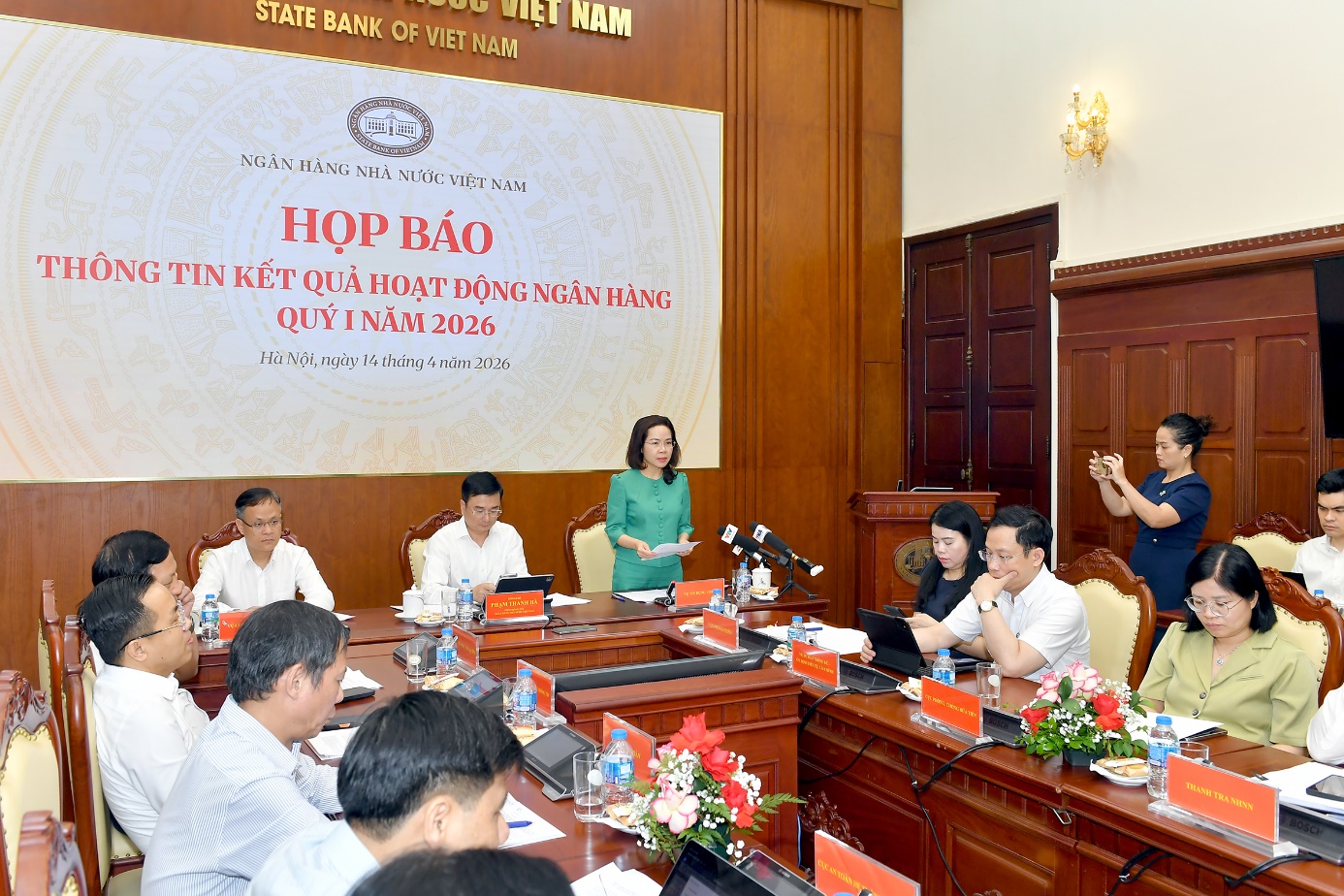
Ms. Ha Thu Giang, Director General of the Department of Credit for Economic Sectors, addresses questions at the press conference.
Regarding the implementation of credit programs, Ms. Ha Thu Giang, Director General of the Department of Credit for Economic Sectors, stated that the credit program for the agriculture, forestry, and fisheries sector has expanded its scope from the previous forestry and fisheries program. Its scale has been significantly increased—from an initial VND 15 trillion to VND 185 trillion. To date, cumulative disbursement has exceeded VND 185 trillion, meeting the program’s target.
For the credit program supporting investment in electricity infrastructure, transportation, and strategic technologies, Ms. Ha Thu Giang noted that after more than two months of implementation, the program has recorded initial positive results. As of February 28, 2026, commercial banks had signed credit agreements for eight projects, with total committed funding of approximately VND 71 trillion, of which over VND 7 trillion had been disbursed. In addition, 23 projects are currently under appraisal by commercial banks in accordance with regulations.
The loan program supporting linkages in production, processing, and consumption of high-quality, low-emission rice in the Mekong Delta has been actively promoted, with close coordination with the Ministry of Agriculture and Environment to address emerging challenges. After nine months of implementation, cumulative disbursement had reached approximately VND 3.6 trillion by the end of February 2026. This is the first agricultural credit program contributing to the development of green, low-emission agriculture.
In addition, Ms. Ha Thu Giang reported that, as of December 31, 2025, outstanding green credit loans reached nearly VND 780 trillion, up 14.62% compared to the end of 2024, accounting for 4.19% of total outstanding loans in the economy.