
On September 24, 2026, the State Bank of Vietnam (SBV) held a virtual conference on internal control, internal audit, and inspection activities at credit institutions (CIs) in 2026. The conference was co-chaired by SBV Governor Pham Duc An and Deputy Governor Pham Quang Dzung.

The conference presidium
Speaking at the conference, Governor Pham Duc An highly appreciated the sense of responsibility and efforts of the credit institution system in innovating, maintaining stability, and promoting development amid unprecedented fluctuations in the global and domestic economies.
The Governor noted that pressures on the banking sector would remain substantial in the coming period, while the credit institution system still faced shortcomings and potential risks that could affect the safety and soundness of individual credit institutions and the banking system as a whole if not detected, addressed, and handled in a timely manner.

Governor Pham Duc An delivers the opening remarks
Emphasizing the important role of internal control, audit, and inspection, Governor Pham Duc An stated that if these systems failed to fully perform their functions, operational risks might not be identified, warned against, prevented, or addressed in a timely manner.
Therefore, Governor Pham Duc An requested that internal inspection, control, and audit activities be implemented decisively and comprehensively in accordance with the Law on Credit Institutions and the SBV’s regulations. At the same time, each credit institution should proactively review and reassess its internal control, internal audit, and inspection systems, identify issues requiring resolution, and develop appropriate roadmaps for adjustment and improvement, while fully promoting the roles and responsibilities of owners, Boards of Directors/Boards of Members, General Directors, Boards of Control, and internal inspection, control, and audit units.
The Governor also emphasized the role of Boards of Control in performing their oversight functions and contributing to ensuring that credit institutions operate safely and effectively, manage and control risks, and properly oversee the activities of the Boards of Directors and Executive Boards.
At the conference, participants focused on sharing good practices and lessons learned from practical experience, thereby strengthening discipline and order, improving governance and risk management capabilities, and contributing to ensuring the safe, transparent, effective, and sustainable operation of the credit institution system.
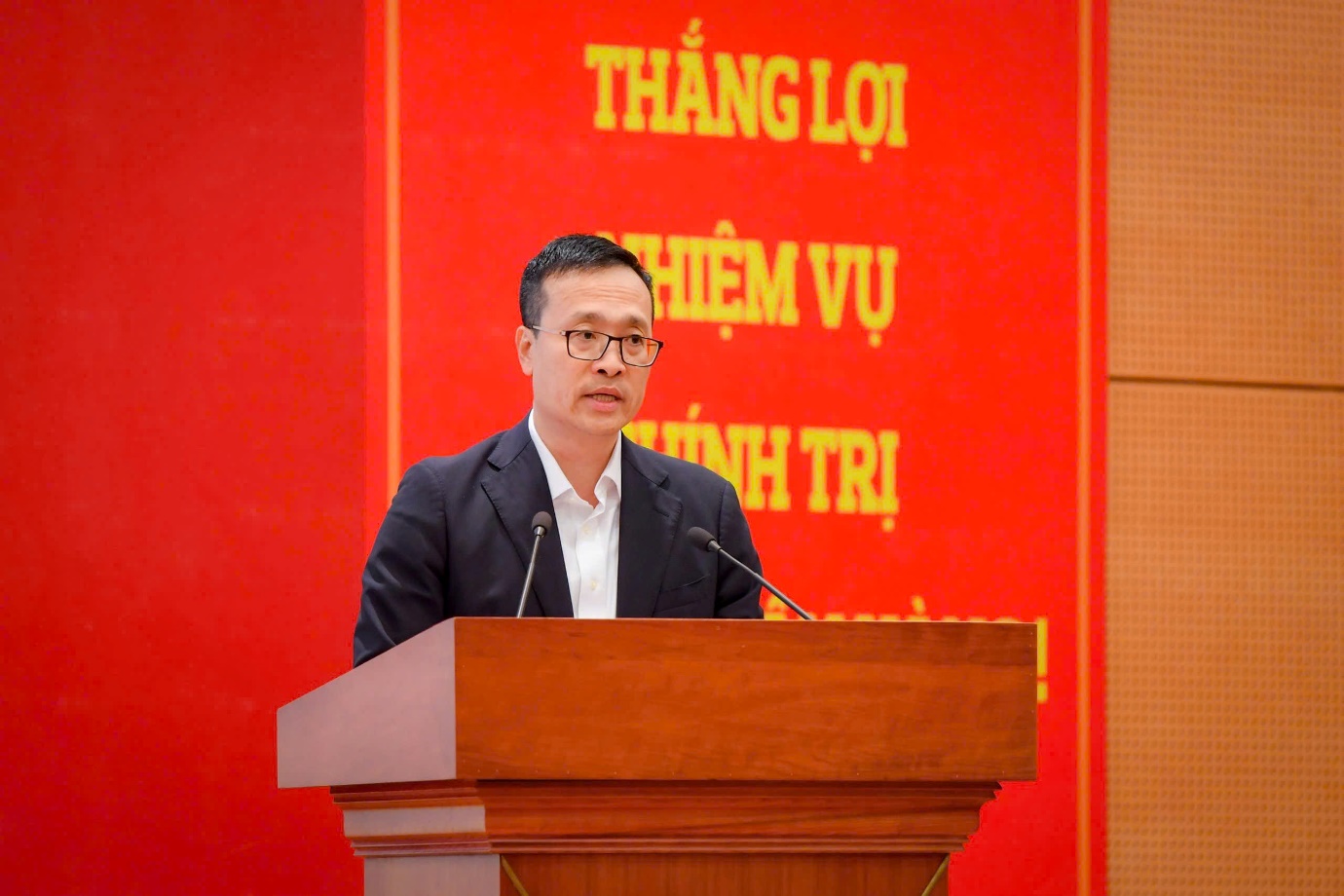
Deputy Governor Pham Quang Dzung speaks at the conference
Internal control systems at credit institutions have been gradually improved
Presenting a report at the conference, Ms. Nguyen Thi Thu Huong, Director General of the Credit Institution Management and Supervision Department, said that credit institutions had basically established and maintained internal control and internal audit systems appropriate to their scale and nature of operations. They had gradually improved business regulations and procedures, clarified responsibilities, and shifted toward risk-based inspection and audit. SBV supervision had also focused on potentially high-risk areas and activities, thereby enabling timely reminders and warnings and requiring credit institutions to address identified issues.

Director General Nguyen Thi Thu Huong presents the report at the conference
According to Mr. Lai Huu Phuoc, Chief Inspector of the SBV Inspectorate, inspection, control, supervision, and internal audit activities at commercial banks had undergone positive changes in recent years. The independence of inspection and internal audit functions had been strengthened, while some banks had applied technology and data to improve supervisory effectiveness. However, certain shortcomings and violations had yet to be detected, or had not been detected promptly, through inspection, control, and internal audit activities.
To improve operational effectiveness, commercial banks need to continue enhancing the quality of risk-based inspection and audit, with a focus on key areas; clearly identifying causes and responsibilities and making recommendations for addressing shortcomings and violations; while accelerating the application of technology, data, and artificial intelligence (AI) in supervision and audit, early risk warning, and the development of a compliance culture.
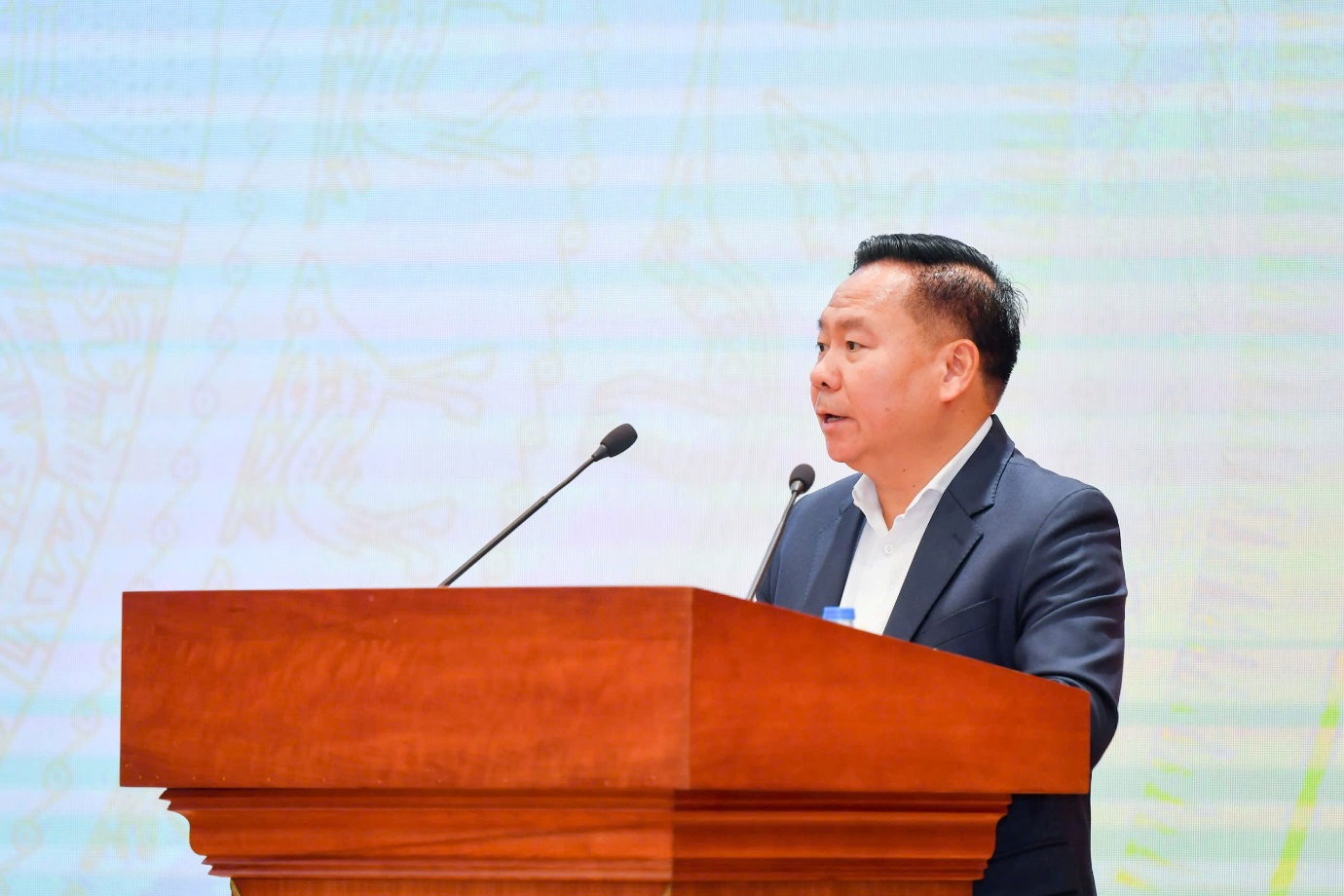
Chief Inspector Lai Huu Phuoc of the SBV Inspectorate presents the report at the conference
Also at the conference, Mr. Nguyen Duc Long, Director General of the Department for Credit Institutions System Safety, highlighted key requirements and considerations in implementing internal control systems under Circular No. 83/2025/TT-NHNN regulating the internal control systems of commercial banks and foreign bank branches.
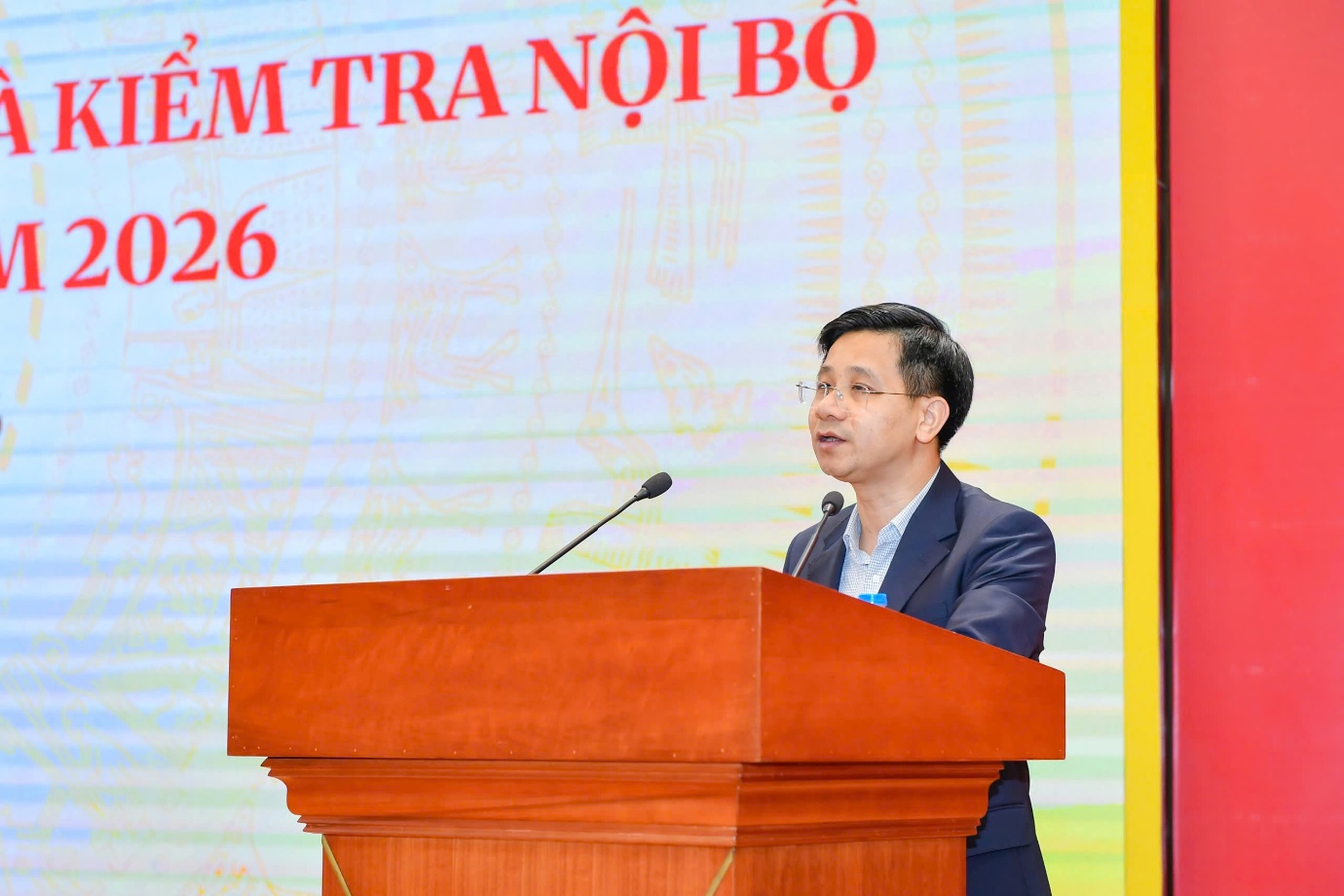
Director General Nguyen Duc Long of the Department for Credit Institutions System Safety speaks at the conference
At the conference, representatives of SBV Regional Branches provided updates on the operational situation of credit institutions in their respective areas, issues requiring attention in internal inspection and control, and solutions to strengthen risk identification and prevention.
In addition, several Heads of the Boards of Control from credit institutions shared practical experience in implementing internal control, internal audit, and inspection activities at their respective institutions, focusing on issues requiring attention, existing limitations and their causes, as well as solutions that had been implemented or would be implemented to improve the effectiveness of internal control, internal audit, and inspection systems.
Strengthening the effectiveness and efficiency of internal control
Based on reports from relevant units and discussions at the conference, Deputy Governor Pham Quang Dzung noted that the legal framework for internal control systems at credit institutions had undergone significant changes in recent years, resulting in increasingly stringent requirements for governance, management, control, and risk management.
Therefore, credit institutions need to continue comprehensively reviewing and assessing their internal control systems, ensuring that mechanisms, policies, procedures, internal regulations, and organizational structures are updated and consistent with legal requirements and practical operations; strengthen early and remote control; improve the quality of asset assessment and classification, provisioning, and the accurate reflection of actual business results, thereby enhancing resilience and ensuring operational safety; continue reviewing and assessing shortcomings and violations identified through inspections, supervision, and SBV directives and warnings, and promptly and fully address them; and regularly review, amend, and supplement internal regulations and procedures to ensure consistency with legal requirements and actual operating conditions.
With regard to inspection, control, and internal audit, credit institutions need to continue improving their effectiveness and efficiency, strengthen risk-based inspection, control, and audit, and promote the roles and responsibilities of the Boards of Control and internal audit functions while ensuring independence and objectivity. They should promptly detect and provide early warnings of risks and proactively develop corrective measures or report violations to competent authorities for handling.
Credit institutions should also accelerate the application of information technology, digital transformation, big data analytics, AI, e-Audit platforms, and early warning tools in internal audit and control activities.

Overview of the conference
The Deputy Governor requested credit institutions to urgently fill vacant management, executive, control, and other key positions. Notably, he requested SBV units and credit institutions to strengthen supervision of compliance with the standards and eligibility requirements applicable to managers, executives, and members of the Boards of Control.
For SBV Regional Branches, the Deputy Governor requested them to continue closely monitoring socio-economic developments and monetary and banking activities in their respective areas; strengthen inspection, examination, and supervision of credit institutions and their network units under their jurisdiction; and promptly identify, warn against, and address risks and potential risks, particularly those related to governance and management, credit activities, capital mobilization, credit quality, and NPL resolution.
SBV units, within their assigned functions and responsibilities, should continue reviewing and improving the legal framework. The Credit Institution Management and Supervision Department, the Department for Credit Institutions System Safety, and the SBV Inspectorate should continue to innovate and improve the quality and effectiveness of inspection, examination, and supervision, promptly identifying, warning against, and preventing risks and taking appropriate measures to address them, thereby contributing to ensuring the operational safety of individual credit institutions and the banking system as a whole.